The Commanding Self vs The Self-Accusing Self
In today’s world, where speed, ambition, and desire shape much of human behaviour, it becomes easy to mistake impulse for purpose and ego for identity.
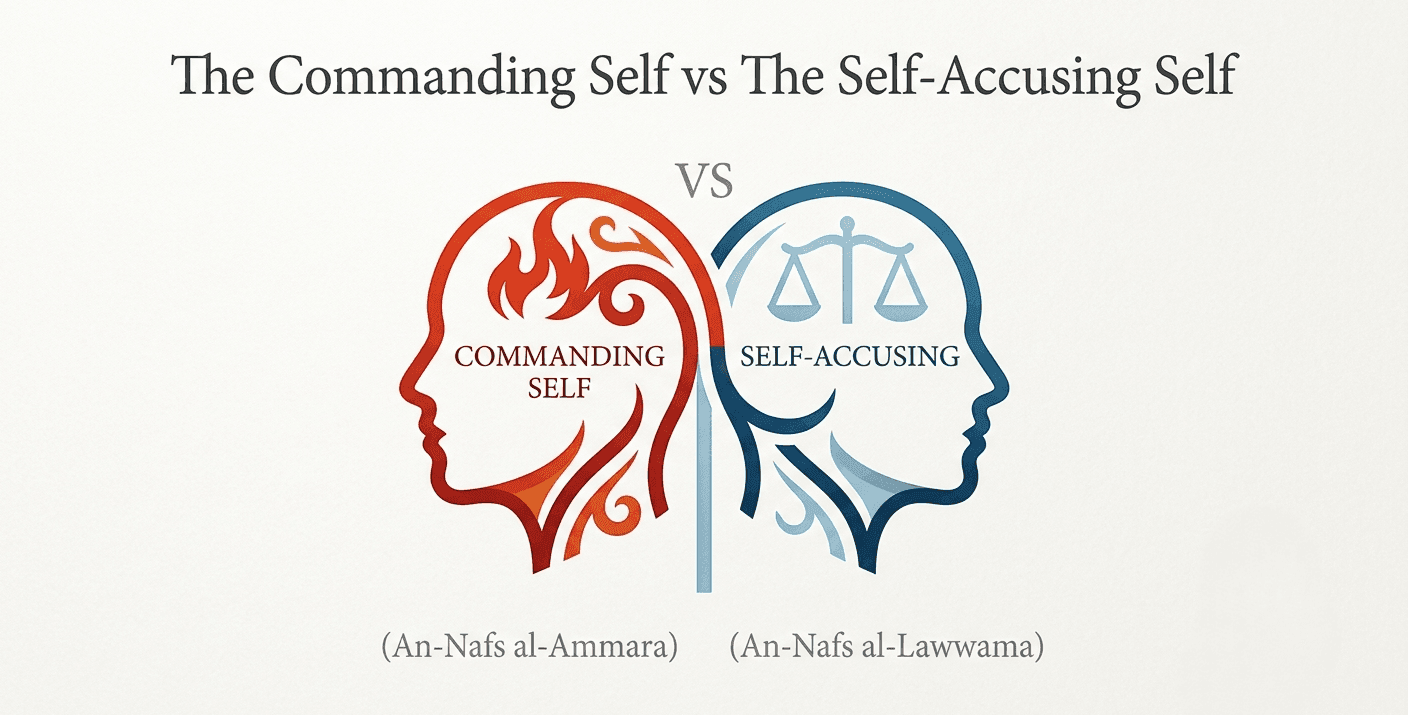
The greatest battles we fight are often invisible, waged not against the world around us, but within the depths of the self. In today’s world, where speed, ambition, and desire shape much of human behaviour, it becomes easy to mistake impulse for purpose and ego for identity. Yet beneath these outward pursuits lies an internal struggle between the part of the self that commands desire and the part that recognises its consequences. To understand this struggle is to begin understanding the deeper reality of who we are.
There are different levels of Self, and navigating through these levels is essential in forming a connection with what truly is, and in attaining self-realization and fulfilment. Often, we attach this fulfilment to the acquisition of wealth, fame, recognition, and authority over worldly things. One may argue that these material acquisitions are necessary to live a comfortable life. However, whether this holds true or not is influenced by the level of self from which one is operating. With reflection, one begins to realise that clinging to worldly acquisitions often forms the trajectory of human struggle, silently detouring us from our true purpose.
The primary struggle begins at what Ibn Arabi calls An-Nafs al-Ammara, the Commanding Self. At this level, we are mostly driven by impulses, ego, and desire. The pursuit of pleasure, the avoidance of pain, and the need to be seen or placed in the spotlight are all ways in which the self seeks to protect the ego. When a person seeks attention, fame, or attaches fulfillment to the acquisition of material things and worldly pleasures, he is operating from this level. This often reflects a misunderstanding of purpose. To believe that one’s desires are the authentic voice of the self, and that the pursuit of status or recognition is wisdom, is a fundamental flaw. It suggests a lack of awareness,a failure to recognise the prison walls erected by the ego. At this level, growth often evades the person, because the self remains reactive to whatever the ego commands.
However, growth tends to emerge in the midst of internal conflict, between what you know to be right and what the ego whispers. This level is known as An-Nafs al-Lawwama, the Self-Accusing Self. This internal civil war leaves us recognising our wrongs while constantly reflecting on how to improve. Yet a major trap at this stage is that the struggle itself can become a comfortable identity. Real growth is achieved when we transition from merely fighting the self to understanding it. Through introspection, asking why we do what we do, why certain behaviours recur, what is worth pursuing, and what requires restraint, we begin to move closer to that understanding. In such moments, silence becomes louder than sound.
True advancement between these levels of self begins when we move from being mere strugglers to becoming witnesses of our own inner reality. Ibn Arabi suggests that the path to higher awareness lies in recognising that both desire and the judgment of desire are movements within the self. When we learn to observe our impulses with sincere awareness rather than immediate reaction, their grip begins to loosen. In that sacred space between stimulus and response, the Inspired Self, An-Nafs al-Mulhama, begins to emerge, offering a form of guidance deeper than impulse and clearer than reason. What then is the Inspired Self? That is a reflection for another time.